CatUDP'S blog
🚀 What Is the International Space Station (ISS)? – Part 2
🛰️ Visibility of the ISS
Under the right conditions, the International Space Station (ISS) can be seen with the naked eye.
At its brightest, it can reach about magnitude −2, comparable to Jupiter.
It is typically visible for a short period:
within about two hours after sunset or before sunrise
This is when:
- the sky is dark enough, and
- the ISS is still illuminated by sunlight and reflects it toward Earth🌎️
🔭 Observation Passes (Predicted Data)
The timing and direction of ISS visibility and radio communication vary depending on your location.
A pass refers to the period when the ISS is above the horizon and:
- radio communication is possible, and
- sometimes it is also visible
Key terms:
- AOS (Acquisition of Signal): the moment the ISS rises above the horizon
- LOS (Loss of Signal): the moment it sets below the horizon
- TCA (Time of Closest Approach): when the ISS is closest to the observer
One of the most important factors is the maximum elevation angle.
Higher elevation = better chances for both:
- radio reception (VHF/UHF line-of-sight)
- visual observation
To predict passes, you can use:
- smartphone satellite tracking apps 📱
- websites such as N2YO.com
I also plan to add pass prediction features to my own ISS tracking tool.
👩🚀 Internal Factors (Crew Activity)
Another critical factor is the daily schedule of the ISS crew.
Some systems, such as:
- repeaters
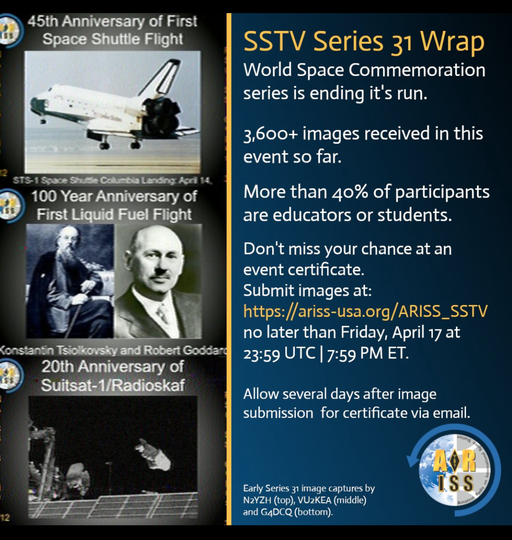
- SSTV (image transmission)
may operate automatically and can sometimes be received continuously.
However:
Voice communication on 145.800 MHz FM is usually manual
This means:
If the crew is asleep, there will be no voice transmission.
The ISS operates on Coordinated Universal Time (UTC).
Typical schedule:
- Wake-up: around 06:00 UTC
- Daily planning conference: 07:30 UTC
- Work period: 08:00–12:00 UTC
- Afternoon: continued work, maintenance, and exercise
- Sleep: around 21:30 UTC
Their daily routine is managed in 5-minute increments.
📡 Radio Operations on the ISS
ISS voice communication on 145.800 MHz (FM) is relatively rare outside of special events such as:
- ARISS school contacts
- SSTV transmissions
Because of this, it is not something you can reliably receive on a daily basis.
To better monitor ISS activity, it is recommended to also listen to:
- the UHF crossband repeater downlink (437.8 MHz)
- the packet (APRS) frequency at 145.825 MHz
By monitoring multiple frequencies, you can significantly increase your chances of detecting ISS activity 🚀
The ISS is not always talking—but it is almost always transmitting something.
There is no fully public, fixed schedule because operations may change due to:
- spacewalks (EVAs)
- maintenance
- mission priorities
Therefore, it is important to check:
ARISS (Amateur Radio on the International Space Station)
X (formerly Twitter)
for the latest updates.
📻 Equipment Used on the ISS
The ISS is equipped with amateur radio systems such as:
KENWOOD TM-D710GA
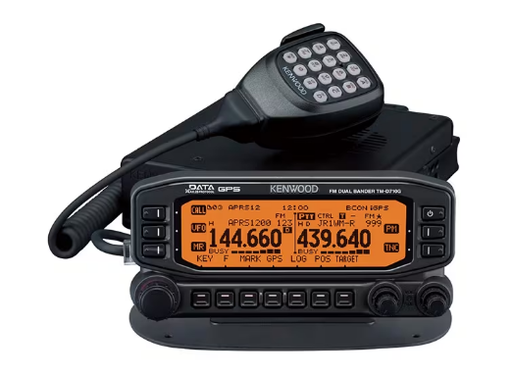
These radios are used for:
- direct voice communication
- school contacts (scheduled communication with students)
- communication with amateur radio operators worldwide
Typical transmit power:
10W to 25W
Main signals of interest:
- Voice (direct): 145.800 MHz FM 👈
- SSTV (image transmission): 437.550 MHz FM 👈
👉 These are the signals I will be targeting.
🐈 Summary
The ISS orbits the Earth about 16 times per day, so reception depends on catching the right pass.
For reception, the following are recommended:
- handheld or mobile radios
- directional antennas
Indoor antennas may make reception significantly more difficult.
🛠️ Next Step
To improve my chances, I decided to build a tool for Raspberry Pi that will:
- automatically generate ISS pass schedules
- track Doppler shift
- record received audio
👉 This tool will be the core of my experiment.